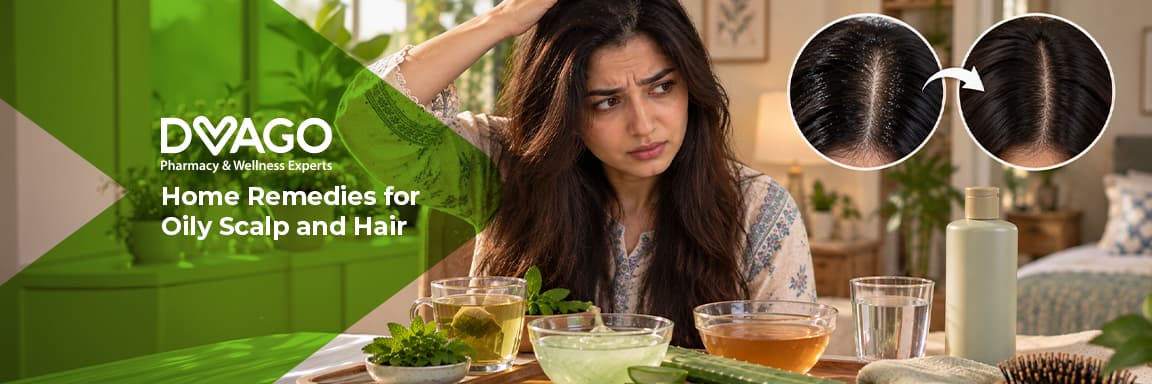
Home Remedies For Oily Scalp And Hair
If your hair looks fresh in the morning but greasy and flat by afternoon, you know the frustration of an oily scalp. It happens when the scalp's sebaceous glands produce more sebum (natural oil) than your hair can carry leaving roots looking slick, hair limp, and sometimes an itchy or flaky scalp along with it. It is extremely common and largely manageable at home.
The key is not to fight your scalp harshly, but to work with it: wash the right way, avoid what makes oiliness worse, and use a few gentle remedies. This guide covers home remedies for an oily scalp and hair, including traditional options like multani mitti (fuller's earth) — what to steer clear of, and when an oily scalp is worth showing a doctor. It is for general information only and is not a substitute for medical advice.
Oily Scalp and Hair: Quick Answer
In short:
Wash regularly with a gentle shampoo, focusing on the scalp (not the lengths), and condition only the ends.
Use a clarifying shampoo about once a week to remove buildup, and a clay mask like multani mitti to absorb excess oil.
Avoid heavy oils and products at the roots, very hot water, over-conditioning, and overusing dry shampoo.
See a doctor if your oily scalp comes with persistent flaking, redness or itching, hair loss, or (in women) acne and irregular periods.
What Causes an Oily Scalp and Greasy Hair?
A little oil is normal and healthy — sebum protects your scalp and hair. Oiliness becomes a problem when the glands overproduce, or when oil, sweat and product residue build up near the scalp. Common causes include:
• Genetics and hair type — fine or straight hair shows oil quickly, because sebum spreads easily from root to tip.
• Hormones — puberty, the menstrual cycle, pregnancy, and hormonal conditions can ramp up oil production.
• Product buildup — heavy conditioners, oils, serums and styling products, especially near the roots.
• Washing technique — not rinsing well, or scrubbing harshly.
• Heat, humidity and sweat — common in Pakistan's climate.
• Touching or brushing hair too much, which spreads oil down the strands.
Does Washing Too Often Make Hair Oilier?
This is one of the most common beliefs — that shampooing frequently “trains” your scalp to produce more oil. The honest answer is more nuanced. Oil production is mainly controlled by your hormones, and you can't permanently retrain your glands by washing less. In fact, dermatologists suggest treating your scalp like the skin on your face: if it's oily, cleaning it regularly keeps it balanced, and very oily hair may even need daily washing.
What is true is that harsh, stripping shampoos can damage the scalp's protective barrier and, in some people, trigger a rebound where the scalp feels dry and then over-produces oil. So the issue is usually the harshness of the product, not the frequency of washing. The takeaway: wash as often as your scalp needs, but use a gentle shampoo rather than an aggressive one.
Home Remedies for an Oily Scalp and Hair
1. Wash Correctly With a Gentle Shampoo
How you wash matters as much as how often. Use a mild, lightweight shampoo (formulas labelled “balancing” or for oily hair, sometimes with salicylic acid or tea tree oil, work well). Massage it into the scalp with your fingertips — not your nails — where the oil actually is, rather than scrubbing the lengths. Rinse thoroughly, as leftover shampoo adds to buildup.
2. Condition Only the Ends
Conditioner on the scalp and roots weighs hair down and makes it greasy faster. Apply conditioner only from the mid-lengths to the ends, keeping it away from the scalp, and rinse well.
3. Use a Clarifying Shampoo Once a Week
A clarifying shampoo gives a deeper clean, removing product buildup, excess oil and residue that regular shampoo leaves behind. Use it about once a week (roughly every 7 to 10 days) — not daily, as overusing it strips the scalp and can backfire. Think of it as a weekly “reset.”
4. Try a Clay Mask Like Multani Mitti
Clay is a classic remedy for oily scalps because it absorbs excess oil. Multani mitti (fuller's earth), long used across Pakistan and South Asia, can be mixed into a paste with water and applied to the scalp for 15 to 20 minutes before rinsing, once a week. It leaves the scalp feeling clean and less greasy. Besan (gram flour) is another traditional option used similarly. Follow with a light conditioner on the ends if your hair feels dry.
5. Rinse With Diluted Apple Cider Vinegar or Green Tea
A diluted apple cider vinegar rinse (about one part vinegar to three parts water, used as a final rinse after shampooing) is a popular remedy said to help balance the scalp's pH and cut through oil, though the evidence is limited. A cooled green tea rinse is another gentle option some people find refreshing. Always dilute vinegar well, avoid the eyes, and stop if it irritates.
6. Skip Heavy Oils and Products at the Roots
It sounds obvious, but adding oil to an already oily scalp makes buildup worse. If you like oiling your hair, keep it to the lengths and ends, not the roots, and wash it out well. Go easy on heavy serums, waxes and pomades near the scalp too.
7. Use Dry Shampoo Between Washes — Sparingly
Dry shampoo absorbs oil and freshens roots between washes, which is handy on busy days. But it doesn't clean the scalp, and relying on it daily can cause buildup and clogged follicles. Use it occasionally, not as a replacement for washing.
8. Mind Your Habits, Diet and Stress
Small habits add up: avoid touching or running your hands through your hair, clean your combs and brushes regularly, and wash pillowcases often. A balanced diet and managing stress may also help, since hormones and overall health influence oil production.
What to Avoid With an Oily Scalp
• Very hot water, which can irritate the scalp — use lukewarm or cool water, and a cool final rinse.
• Harsh, stripping shampoos used aggressively, which can trigger rebound oiliness.
• Applying conditioner, heavy oils or styling products to the roots and scalp.
• Overusing dry shampoo instead of actually washing.
• Scrubbing with nails or brushing excessively, which spreads oil and irritates the scalp.
• Undiluted lemon juice or vinegar directly on the scalp, which can sting and irritate.
When to See a Doctor About an Oily Scalp
An oily scalp is usually just a cosmetic nuisance, but see a doctor or dermatologist if:
• Your oily scalp comes with persistent flaking, redness, itching or a rash — this can be seborrheic dermatitis, which may need a medicated shampoo (with ingredients like ketoconazole, zinc pyrithione or selenium sulfide), available at pharmacies including DVAGO.
• You notice hair thinning, increased shedding or bald patches.
• You have pimples on the scalp, a persistent odour, or signs of infection.
• Oiliness is sudden or severe and doesn't respond to a good routine.
For women, an oily scalp and skin together with acne, irregular periods or excess facial or body hair can be a sign of a hormonal condition such as polycystic ovary syndrome (PCOS) — worth discussing with a doctor. In general, if home care isn't helping after several weeks, a dermatologist or trichologist can identify the cause and recommend targeted treatment.
Frequently Asked Questions About Oily Scalp and Hair
How do I get rid of an oily scalp naturally?
Wash regularly with a gentle shampoo (focusing on the scalp), condition only the ends, use a clarifying shampoo about once a week, and try an oil-absorbing clay mask like multani mitti. Avoid heavy oils and products at the roots, hot water, and overusing dry shampoo. Give a new routine a few weeks.
How often should I wash oily hair?
As often as your scalp needs — for very oily or fine hair, that may be daily or every other day, using a gentle shampoo. The idea that frequent washing “trains” the scalp to make more oil is largely a myth; it's harsh, stripping products, not frequency, that can trigger rebound oiliness.
Is multani mitti good for an oily scalp?
Yes, many people find it helpful. Multani mitti (fuller's earth) is a clay that absorbs excess oil, so applied as a paste to the scalp for 15 to 20 minutes once a week it can leave hair feeling less greasy. Follow with a light conditioner on the ends if your hair feels dry afterwards.
Does apple cider vinegar help oily hair?
It's a popular rinse thought to balance scalp pH and cut through oil, and some people like it — but the evidence is limited. If you try it, dilute about one part vinegar to three parts water, use it as a final rinse, keep it out of your eyes, and stop if it irritates your scalp.
Should I still condition oily hair?
Yes, but only on the mid-lengths and ends, never the scalp or roots. Skipping conditioner entirely can leave your ends dry and damaged, while conditioning the roots makes hair greasy faster. Rinse thoroughly.
Can an oily scalp cause hair loss?
Excess oil by itself doesn't cause baldness. But chronic buildup and inflammation, or a related scalp condition like seborrheic dermatitis, may worsen shedding in some people. If you notice hair thinning or increased shedding along with an oily scalp, see a doctor.
When should I see a doctor for an oily scalp?
See a doctor if your oily scalp comes with persistent flaking, redness, itching or a rash (possible seborrheic dermatitis), hair loss, pimples or odour, or if it doesn't improve with a good routine. Women with oily skin plus acne and irregular periods should also get checked, as it can signal a hormonal issue.
Conclusion
An oily scalp and greasy hair are common and, for most people, easily managed at home. The foundations are simple: wash regularly with a gentle shampoo focused on the scalp, condition only the ends, clarify weekly, and keep heavy oils and products away from the roots. Traditional remedies like a multani mitti clay mask can help absorb excess oil, and small habit changes — not touching your hair, cleaning brushes, lukewarm rinses — make a real difference.
Be patient, as it can take a few weeks to see the balance shift. And remember that an oily scalp with persistent flaking, itching, redness, hair loss, or hormonal signs is worth showing a doctor, since it may point to a treatable condition rather than just excess oil.
Medical Disclaimer
This article is for general information and education only. It is not a substitute for professional medical advice, diagnosis or treatment. Natural remedies can irritate some scalps, so patch test and stop if irritation occurs. Persistent scalp problems — with flaking, redness, itching, hair loss, or possible hormonal signs — should be assessed by a qualified doctor or dermatologist.