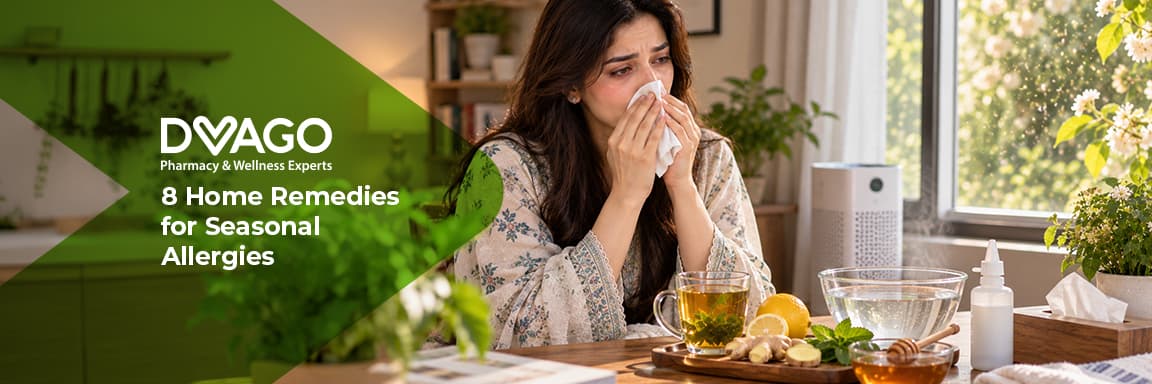
8 Home Remedies For Seasonal Allergies
When allergy season arrives, the sneezing, runny nose, itchy watery eyes and endless congestion can make daily life miserable. Seasonal allergies, also called hay fever or allergic rhinitis happen when your immune system overreacts to airborne triggers like pollen. For anyone in Pakistan, and especially in Islamabad, this is no small matter: the city's spring pollen season is among the most intense in the world.
The good news is that a lot of relief comes down to reducing your contact with allergens and soothing your symptoms at home. This guide shares 8 home remedies for seasonal allergies, with honest notes on which have the best evidence, plus when home measures aren't enough and it's time to see a doctor. It is for general information only and is not a substitute for medical advice.
Home Remedies for Seasonal Allergies: Quick Answer
In short:
The most effective home approach is reducing your exposure to pollen — checking pollen counts, staying indoors on high-pollen days, and keeping windows closed.
Rinsing your nose with saline (using safe, distilled or boiled water) has good evidence for easing symptoms.
Clean indoor air, showering after being outside, and steam and hydration all help.
Home remedies work best alongside — not instead of — over-the-counter allergy medicines. See a doctor if symptoms are severe, affect your sleep, or come with wheezing or breathlessness.
What Are Seasonal Allergies?
Seasonal allergies occur when your immune system treats a harmless airborne substance — most often pollen from trees, grasses or weeds as a threat, releasing histamine and triggering inflammation. The result is the familiar set of symptoms: sneezing, a runny or blocked nose, itchy or watery eyes, an itchy nose or throat, postnasal drip and tiredness. They tend to flare at the same time each year, when the pollen you react to is in the air.
Unlike a cold, allergies aren't caused by a virus, don't cause a fever, and can last for weeks as long as the allergen is around. Knowing your trigger and its season helps you prepare and act early.
Why Seasonal Allergies Are So Bad in Pakistan
Pakistan and Islamabad in particular have an unusually severe pollen problem. Islamabad has been called “the allergy capital of the world,” largely because of the paper mulberry tree (planted decades ago to green the city), which produces enormous amounts of pollen each spring. Paper mulberry alone accounts for around 97 percent of the capital's spring pollen, and counts have reached 40,000 to 50,000 grains per cubic metre of air — levels that would be considered extreme anywhere (a count around 9,000 is already regarded as very high in some countries).
The season typically runs from around mid-March into April, peaking early, and dry, windy days make it worse. The World Health Organization has estimated that pollen causes more than 40 percent of respiratory allergies in Islamabad, and paper mulberry pollen can also trigger asthma attacks. If you live in an affected area, checking the Pakistan Meteorological Department's daily pollen count and planning around peak days can make a real difference.
8 Home Remedies for Seasonal Allergies
1. Reduce Your Exposure to Pollen
Avoiding the trigger is the single most effective thing you can do. Check the daily pollen count and, on high-pollen days, try to stay indoors — especially in the early morning and on dry, windy days, when pollen is at its worst. Keep windows and doors closed at home and in the car during peak season, and use air conditioning rather than open windows if you can.
2. Shower and Change Clothes After Being Outside
Pollen clings to your hair, skin and clothing. After spending time outdoors during allergy season, shower and change into clean clothes so you don't carry pollen through your home or onto your bed. For the same reason, avoid drying laundry outside on high-pollen days, as pollen settles onto it.
3. Wear a Mask and Sunglasses Outdoors
When you do go out during peak pollen, a well-fitting mask reduces how much pollen you breathe in, and wrap-around sunglasses help keep it out of your eyes — easing the itchy, watery-eye symptoms. This is especially worthwhile in places like Islamabad during the spring peak.
4. Rinse Your Nose With Saline
Rinsing the nasal passages with a saltwater (saline) solution — using a neti pot, squeeze bottle or saline spray — physically washes out pollen and mucus and is one of the better-evidenced home remedies for allergy symptoms. Do it once or twice a day during the season.
Important safety point for nasal rinsing:
Only use distilled, sterile, or previously boiled-and-cooled water — never straight tap water. In rare cases, tap water used in the nose has caused a dangerous infection from an amoeba. Also rinse and air-dry your device after each use.
5. Keep Your Indoor Air Clean
Since you can't avoid pollen entirely, making your home a low-allergen refuge helps. A HEPA air purifier can remove a large share of airborne pollen and other allergens from indoor air. Keep windows shut during high-pollen periods, and if you use air conditioning, keep its filters clean.
6. Reduce Indoor Allergens Too
Dust mites, mold and pet dander can add to your allergy burden year-round. Wash bedding weekly in hot water, dust and vacuum regularly (ideally with a HEPA-filter vacuum), fix damp and mould, and keep pets out of the bedroom if you're sensitive to them.
7. Soothe Symptoms With Steam and Hydration
Breathing in steam — for example from a bowl of hot water with a towel over your head, or a warm shower — can loosen mucus and ease a blocked, irritated nose. Drinking plenty of fluids helps thin mucus and keeps you comfortable. These don't treat the allergy itself, but they offer gentle symptom relief.
8. Be Cautious With “Natural” Supplements
You'll see many natural remedies promoted for allergies. Be realistic about them:
• Local honey: a very popular idea, but there is no convincing scientific evidence that it relieves seasonal allergies — and people allergic to pollen can even react to honey. (Never give honey to a child under 1 year.)
• Butterbur: some studies hint it may help hay fever, but there are real safety concerns, and only special “PA-free” forms are considered safer. Don't use it without medical advice, and not in pregnancy, breastfeeding or children.
• Quercetin, probiotics and spirulina: evidence is limited and inconsistent. They're not reliable substitutes for proven treatments.
If you want to try any supplement, check with a doctor or pharmacist first, especially if you take other medicines or are pregnant.
When Home Remedies Aren't Enough
Home remedies reduce your exposure and ease mild symptoms, but for many people they aren't enough on their own — and that's where medication helps. It's worth being honest that over-the-counter allergy treatments are often the most effective option for real relief:
• Antihistamines (tablets, syrups or eye drops) reduce sneezing, itching and a runny nose.
• Steroid nasal sprays are among the most effective treatments for nasal allergy symptoms and congestion when used regularly through the season.
• Saline sprays and drops can be used freely alongside these.
These are available at pharmacies, including DVAGO. Start allergy medicines before or early in your pollen season for best effect, and ask a pharmacist or doctor which is right for you. For severe or hard-to-control allergies, a doctor may recommend allergy testing or immunotherapy (a longer-term treatment that reduces your sensitivity over time).
When to See a Doctor
See a doctor if:
• Your symptoms are severe, last a long time, or aren't controlled by home measures and over-the-counter medicines.
• Allergies are disrupting your sleep, work, school or daily life.
• You have repeated sinus infections, or symptoms all year round.
• You're not sure what you're reacting to and want allergy testing.
Seek medical help promptly for breathing problems.
If you have wheezing, a tight chest, shortness of breath or a worsening cough, this may mean your allergies are affecting your lungs or triggering asthma — which is common with pollen in Pakistan. Severe difficulty breathing is a medical emergency: seek urgent care immediately.
Frequently Asked Questions About Seasonal Allergies
What is the best home remedy for seasonal allergies?
Reducing your exposure to pollen is the most effective step — check pollen counts, stay indoors on high-pollen days, and keep windows closed. Rinsing your nose with saline (using safe distilled or boiled water) also has good evidence. These work best alongside over-the-counter allergy medicines.
Does local honey help with allergies?
There's no convincing scientific evidence that local honey relieves seasonal allergies, despite its popularity. People allergic to pollen may even react to honey, and it should never be given to children under 1. It's fine to enjoy honey, but don't rely on it as an allergy treatment.
How can I stop sneezing and a runny nose from allergies?
Limit pollen exposure, rinse your nose with saline to wash out allergens, and keep indoor air clean. Over-the-counter antihistamines and steroid nasal sprays are very effective for sneezing, itching and a runny nose — a pharmacist can help you choose. Starting them early in the season works best.
Is a saline nasal rinse safe?
Yes, when done correctly. It's one of the better-evidenced home remedies. The key safety rule is to use only distilled, sterile, or previously boiled-and-cooled water — never straight tap water, which in rare cases has caused a dangerous infection — and to clean and air-dry the device after each use.
Why are pollen allergies so bad in Islamabad?
Islamabad has one of the highest spring pollen counts in the world, mainly due to the paper mulberry tree, which produces around 97 percent of the city's spring pollen. Counts can reach extreme levels from mid-March into April, and the pollen can trigger both allergic rhinitis and asthma.
Can seasonal allergies cause breathing problems?
Yes. Pollen — especially paper mulberry pollen in Pakistan — can trigger or worsen asthma, causing wheezing, chest tightness and breathlessness. If you have these symptoms, see a doctor, and treat severe difficulty breathing as an emergency.
When should I see a doctor about my allergies?
See a doctor if symptoms are severe, long-lasting, disrupt your daily life or sleep, aren't controlled by home measures and over-the-counter medicines, occur year-round, or come with breathing problems. A doctor can offer testing, stronger treatment, or immunotherapy.
Conclusion
Seasonal allergies can be genuinely miserable — particularly during Pakistan's intense spring pollen season — but a combination of sensible home measures makes a real difference. The most effective are the simplest: reduce your exposure to pollen, rinse your nose with saline (using safe water), keep your indoor air clean, and shower after being outdoors. Be realistic about unproven remedies like local honey, and cautious with supplements such as butterbur.
Remember that home remedies work best alongside over-the-counter antihistamines and steroid nasal sprays, which are often the key to real relief. If your symptoms are severe, don't settle with treatment, or come with wheezing or breathlessness, see a doctor — effective help, including allergy testing and immunotherapy, is available. With a little planning around pollen season, most people can get their symptoms well under control.
Medical Disclaimer
This article is for general information and education only. It is not a substitute for professional medical advice, diagnosis or treatment. Use nasal rinses only with safe (distilled or boiled) water, and consult a doctor or pharmacist before using supplements or if you are pregnant. Seek medical care if symptoms are severe or not controlled, and urgent care for significant breathing difficulty, wheezing or a suspected asthma attack.